Deciding how to pay for your new Toyota is just as important as choosing between a fuel-efficient Prius for I-295 commutes to Providence or an AWD Highlander for snowy winters in Lincoln and Johnston. The choice between financing and leasing simply depends on your daily driving habits around Woonsocket and whether you prefer long-term ownership or flexible terms.
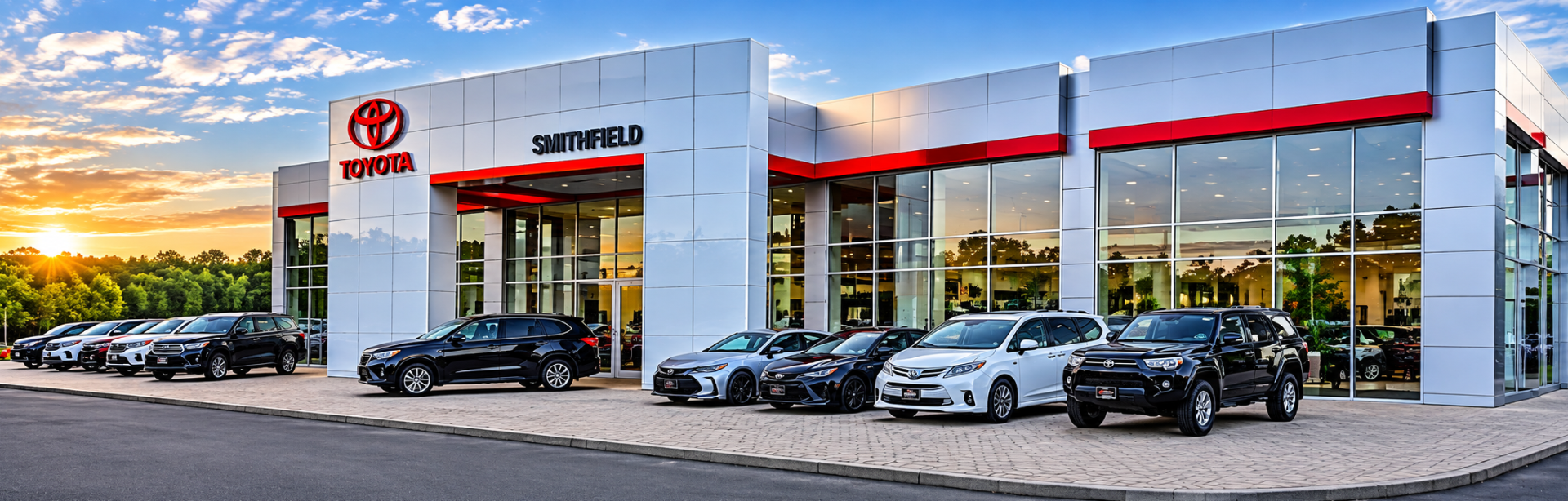
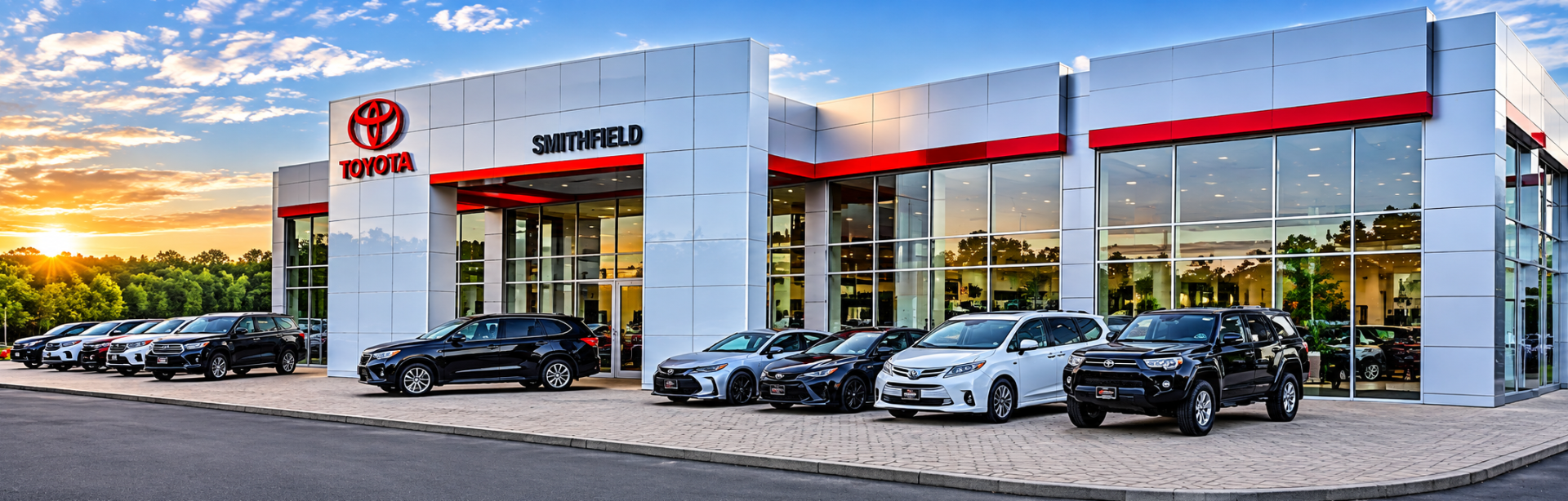
As the team at Toyota of Smithfield, we have maintained a long-standing presence in the community, emphasizing local knowledge and trusted experience in servicing and maintaining Toyota vehicles. We pride ourselves on being a reliable, long-term automotive partner for drivers in Smithfield, RI, and nearby areas, ensuring your vehicle stays dependable well beyond the finance desk.
Key Takeaways (TL; DR)
Getting the right auto loan or lease comes down to understanding your credit, knowing your options, and taking advantage of manufacturer programs. For drivers here in Smithfield, securing a solid plan means a more manageable monthly payment-whether you're commuting down Route 44 or running errands over by The Crossing at Smithfield.
- Your Credit History Matters: A stronger credit score directly influences your interest rate and loan length. Whether you finance a RAV4 Hybrid for a daily commute along I-295 or lease a compact Corolla, good credit translates to spending less on interest over the life of the vehicle.
- Toyota Financial Services (TFS): Using Toyota's dedicated lender often unlocks exclusive manufacturer rates and promotional terms. Getting pre-approved through TFS before you even leave the house simplifies the process and gives you a clear shopping budget.
- Buying Versus Leasing: Financing means you build equity until you own the car outright, which is ideal if you drive high mileage. On the flip side, a standard 36-month lease acts more like a long-term rental, generally resulting in lower monthly payments while keeping you fully covered under the factory 3-year/36,000-mile basic limited warranty.
- End-of-Lease Choices: When your term wraps up, you aren't locked into a single path. You can buy the vehicle at its set residual value, hand the keys back, or upgrade to a newer model-which is perfect if your family suddenly needs a spacious Grand Highlander for weekend events at Bryant University.
- Special Rebate Programs: Taking advantage of unique incentives can significantly lower your bottom line. Toyota typically offers targeted savings, such as Military rebates or College Graduate programs, to help offset initial drive-off costs.
- Preparation is Essential: Before applying, gather your proof of income, check your credit report for errors, and establish a firm monthly budget. A little upfront legwork prevents surprises and drastically speeds up the paperwork on signing day.
How Auto Financing Works for Your Next Toyota
For most drivers around Smithfield, taking out an auto loan is the standard path to owning a new vehicle outright. When you finance, you borrow the car's purchase price from a lender-such as Toyota Financial Services (TFS) or a local Rhode Island credit union-and repay that principal plus interest over a set timeframe. This period is known as your loan term, which typically stretches anywhere from 36 to 72 months depending on what fits your monthly budget. If you rack up significant miles commuting down I-295 or Putnam Pike, financing is a smart strategy because every payment brings you closer to owning the vehicle free and clear.
As you pay down that loan, you continuously build equity, which is the actual cash value of the vehicle that belongs to you rather than the bank. Once you make the final payment, the lender releases the title directly into your name. For busy families running to Bryant University events or loading up a spacious Toyota Highlander for trips to Greenville's apple orchards, full ownership matters. It means you are completely free from the annual mileage limits required by lease agreements, and you can add any permanent roof racks or cargo accessories you need to fit your lifestyle.
How Does Toyota Financial Services (TFS) Work?

As the official lending arm of the brand, Toyota Financial Services (TFS) is designed to simplify how you pay for your next vehicle. Whether you are aiming for a 2026 RAV4 Hybrid to tackle snowy winter commutes along Route 44 or need a 2027 Camry for the daily drive to Fidelity Investments, TFS integrates the financing process right at the dealership. You can even start the paperwork from your couch in Greenville by securing online pre-approval before you ever visit the lot.
Once you submit your application, TFS evaluates factors like your income and credit history to build a customized lease or loan. Keep in mind that available offers naturally vary by credit tier, meaning a higher score typically unlocks prime Annual Percentage Rates (APRs). For drivers around Smithfield, this is crucial: locking in a highly competitive rate keeps your monthly payments predictable, leaving more room in your budget for weekend trips to local apple orchards or everyday household expenses.
TFS also brings exclusive factory-backed incentives to the table that traditional banks usually cannot match. For instance, a recent grad from Bryant University might qualify for the Toyota College Graduate Program, which provides a direct rebate toward a new vehicle purchase or lease. Between these targeted bonuses and flexible term lengths-like opting for a 36-month lease versus a standard 60-month loan-TFS makes it significantly easier to structure a deal that fits your New England lifestyle.
How Does Leasing a Toyota Work?
Leasing a vehicle is essentially an agreement to pay for its use over a specific timeframe rather than buying the whole car outright. When you drive off in a new Toyota RAV4 or Camry, your monthly payments are largely determined by depreciation. You are only financing the difference between the vehicle's original sticker price and its estimated residual value-what it is expected to be worth when the contract ends. If you are regularly making the short commute down Route 44 from Greenville to downtown Providence, this structure means you are strictly covering the vehicle's lifespan for that exact period.
Along with that depreciation cost, lease payments include a finance fee calculated using a "money factor," which acts much like a standard interest rate. Most lease terms span 24 to 36 months, giving you a predictable, medium-term timeline. Once that period concludes, you simply return the vehicle, assuming you stayed within the agreed-upon mileage limits and standard wear-and-tear conditions. For drivers around Smithfield looking for straightforward terms, this approach provides a clear, defined transportation cost without long-term ownership obligations.
Navigating Your Toyota End-of-Lease Choices
As you approach the final months of your Toyota lease, you generally have three straightforward paths: buying your current vehicle, trading up to a new model, or simply returning the keys. For drivers around Smithfield and neighboring Lincoln, this built-in flexibility matters because life changes fast-maybe you recently started commuting to Fidelity Investments and want to switch to a highly efficient Prius, or perhaps you just want to keep the RAV4 you already know inside and out. Knowing your contract's residual value and scheduling an independent inspection about 15 to 60 days before your turn-in date will help you make the smartest financial move.
- Purchase Your Current Toyota: If you love the Highlander that's been hauling your family to Bryant University events, you can buy it outright. You'll just pay the guaranteed residual price established at the beginning of your term, which completely eliminates any worry about excess mileage limits or wear-and-tear fees.
- Upgrade to a New Vehicle: Ready for the latest technology? You can return your current ride and start a fresh lease or finance contract on a new Toyota. This is a great route if you need to swap a standard sedan for a rugged, four-wheel-drive Tacoma i-FORCE MAX before the next snowy winter hits Route 44.
- Return and Walk Away: You are always free to turn the car in at the end of your agreement. Just be sure to arrange a complimentary pre-return inspection to identify any excess wear or mileage overages, giving you a window of time to handle minor fixes before officially handing over the vehicle.
Financing vs. Leasing a Toyota: What Are the Core Differences?

The primary difference is ownership: financing builds equity until you own the Toyota outright, while leasing covers only the depreciation over a set 24- to 36-month term. For Smithfield drivers, financing suits high-mileage commutes down Route 44, whereas leasing typically provides lower monthly payments for shorter everyday trips around Greenville.
| Feature | Financing a Toyota | Leasing a Toyota |
|---|---|---|
| Ownership | The title transfers to your name once the final loan payment is made. | Vehicle ownership remains with the leasing company. |
| Monthly Payments | Usually higher, as calculations are based on paying off the full purchase price plus interest. | Typically lower, because payments only cover the depreciation projected over the lease term. |
| Upfront Costs | Lenders often recommend a 10% to 20% down payment to reduce the loan principal. | Generally requires the first month's payment, a potential security deposit, and standard acquisition fees. |
| Customization | Complete freedom to install aftermarket parts, like a hitch for hauling bikes around Stillwater. | Must be returned in original factory condition; permanent modifications are not permitted. |
| Mileage | No mileage limits, accommodating unlimited daily commuting across I-295 and beyond. | Subject to strict annual caps (usually 10,000 or 12,000 miles) with per-mile overage charges. |
| Wear & Tear | Cosmetic damage from gravel or weather only impacts the vehicle's eventual resale value. | Subject to standard lease-end inspections; out-of-pocket fees apply for excess scratches, stains, or dents. |
| End of Term | You own the vehicle free and clear to keep, sell, or trade. | Turn in the vehicle, purchase it for the predetermined residual value, or lease a new Toyota. |
What Actually Shapes Your Auto Loan or Lease Rates?
When you apply for a lease or loan on a new Toyota, lenders determine your rates by evaluating your financial health-like your credit history and existing debt-alongside the specific vehicle and financing duration you select. What this means for Smithfield drivers is that understanding these variables lets you structure a deal that comfortably fits your budget, whether you commute daily down Putnam Pike or are managing expenses around Bryant University. Even minor adjustments to your application can yield vastly different monthly obligations.
- Your Credit Profile: Lenders review your FICO score to gauge financial reliability. Landing in a higher credit tier typically unlocks the most competitive Annual Percentage Rates (APRs), meaning less of your money goes toward interest charges over the life of the agreement.
- The Initial Down Payment: Handing over more money at signing directly shrinks the principal loan amount. To put it in perspective, putting an extra $1,000 down on a standard 60-month loan generally lowers your monthly payment by roughly $15 to $20.
- Financing Term Length: The timeline you choose forces a trade-off. Opting for a shorter 36-month lease or 48-month loan results in a higher monthly bill, but you will pay significantly less total interest compared to stretching a loan out to 72 months.
- Vehicle Selection and Incentives: The exact model you drive off the lot dictates which manufacturer promotions apply. For instance, if you select a fuel-efficient 2026 Toyota RAV4 Hybrid to tackle I-295 traffic, specific promotional lease specials or subsidized financing rates for that model year can dramatically improve your terms.
- Debt-to-Income (DTI) Ratio: Banks calculate what percentage of your gross monthly income is already committed to existing debts. Maintaining a lower DTI reassures financial institutions that taking on a new Toyota payment won't overextend your household budget.
Are There Special Toyota Incentive Programs I Can Qualify For?
Yes, Toyota offers a variety of specialized financing and lease programs designed to lower your overall out-of-pocket costs if you meet the criteria. Through Toyota Financial Services, eligible buyers can access exclusive rebates that make upgrading to a new model-like a 2026 RAV4 or a 2027 Camry-much more attainable. For Smithfield drivers managing household budgets, qualifying for one of these programs is a practical way to significantly reduce your down payment or monthly rate. For example, if you just finished your degree at Bryant University and secured a starting role at Fidelity Investments, that academic milestone alone could unlock a substantial rebate toward your first new car.
- Toyota College Graduate Program: Designed to help young professionals get a reliable start, this rebate is available to recent college grads and those about to graduate. To qualify through Toyota, you typically need to show proof of your recent degree and provide evidence of current or upcoming employment.
- Toyota Military Rebate: As a token of appreciation, eligible active-duty U.S. military personnel, inactive reservists, retirees, honorably discharged veterans (within a specific timeframe), and their household spouses can receive a special rebate. It is a straightforward benefit to help military families secure dependable transportation, whether that means a spacious SUV or a rugged 2026 Tacoma.
- Loyalty Benefits: If there is already a Toyota parked in your driveway, you might be eligible for exclusive loyalty savings when you decide to trade it in or sign a new lease. Returning customers often receive special terms on select new models as a reward for staying with the brand.
- Regional New England Promotions: Factory and dealer-specific incentives change throughout the year based on local inventory and seasonal demands. You might spot special lease rates on AWD hybrids right before winter weather hits Farnum Pike (Route 104), or limited-time financing offers perfectly timed for summer road trips.
How to Apply for a Toyota Lease or Auto Loan

Securing your financing or lease starts with a quick online estimate and ends with a final signature on your chosen contract terms. For drivers running daily errands down Putnam Pike or commuting past Apple Valley Mall, streamlining this process means less time waiting on paperwork and more time actually enjoying your new Toyota. For example, bringing your two most recent pay stubs and active auto insurance right to the showroom can easily shave hours off the total approval process.
- Get Pre-Qualified: Begin by checking estimated rates through an initial online form. This step typically relies on a soft credit pull, allowing you to view potential borrowing terms without negatively impacting your credit score.
- Gather Your Documents: Lenders require concrete proof of your financial standing. You will need a valid state-issued driver's license, verifiable proof of income, documentation of your local Smithfield residency, and current vehicle insurance.
- Submit the Official Application: Once you select a specific vehicle-like a gas-powered Camry sedan-the formal application moves forward. This step requires a hard credit inquiry to lock in your exact Annual Percentage Rate (APR) and lender approvals.
- Review and Sign: Take a moment to verify every detail on the final contract. You will confirm the exact term length (which often ranges from 36 to 72 months), your precise monthly payment, and any added vehicle protections before adding your final signature.
Paying Cash vs. Financing Your Next Toyota
Putting down the full amount for a 2026 RAV4 Plug-in Hybrid outright means you take immediate ownership without paying a single cent in interest. Avoiding a typical 5% to 7% annual percentage rate over a standard 60-month term saves thousands of dollars by the time the odometer hits six figures. For daily commuters driving along Putnam Pike (Route 44), there is real peace of mind in holding the title free and clear on day one. That said, sinking a massive chunk of savings into a vehicle means those funds are tied up and entirely unavailable if you suddenly need a major home repair in Smithfield.
Conversely, securing an auto loan spreads the purchase price across a predictable 48- or 72-month window so your bank account stays liquid. If your family needs the spacious third-row seating of a 2026 Grand Highlander Gas model for weekend trips to Bryant University games or local apple orchards, financing bridges the gap between what you need and what you have on hand today. What this means for Smithfield drivers is the ability to maintain a healthy emergency fund for unpredictable New England winters, balancing a manageable monthly car payment with overall financial readiness.
What Are the Pros and Cons of Each Payment Method?
Choosing to lease or finance a Toyota depends on your driving habits. For Smithfield drivers, it means balancing short-term affordability with long-term value. Whether you run low-mileage errands near Apple Valley Mall or rack up heavy highway miles, here is how the options stack up.
Pros of Financing a Toyota
- Complete Ownership: Once you make that final payment, the vehicle is 100% yours to keep, sell, or pass down to a family member.
- Unlimited Mileage: If your daily drive takes you up and down Putnam Pike or across state lines, financing means you never have to worry about tracking miles or paying overage fees.
- Total Customization: Want to add all-terrain tires to your Toyota Tacoma for muddy weekend trips? You have the absolute freedom to modify the truck however you see fit.
- Building Long-Term Equity: Because models like the Toyota RAV4 are known for holding their value, each monthly payment builds equity you can eventually use toward your next vehicle.
Cons of Financing a Toyota
- Higher Monthly Commitment: Because you are paying off the entire purchase price of the vehicle, your monthly payments will typically be higher than if you leased the exact same model.
- Post-Warranty Repairs: Once the standard 3-year/36,000-mile Basic Limited Warranty expires, you become fully responsible for the cost of any unexpected mechanical repairs.
- Market Depreciation: Although Toyota vehicles generally retain strong resale value, normal market fluctuations mean your car will still slowly depreciate as it ages.
Pros of Leasing a Toyota
- Lower Monthly Payments: You only pay for the vehicle's expected depreciation during your term, freeing up cash for everyday expenses or weekend shopping at The Crossing at Smithfield.
- Frequent Technology Upgrades: Leasing a new model every two to three years guarantees you get Toyota's latest safety advancements-crucial for navigating winding, icy rural roads during New England winters.
- Worry-Free Maintenance: Most standard 36-month lease terms line up perfectly with Toyota's new-vehicle warranties, ensuring major powertrain or electrical issues remain fully covered.
- Simple Return Process: At the end of your contract, you simply hand the keys back to the dealership. There is no need to haggle over trade-in values or sell the car yourself.
Cons of Leasing a Toyota
- Strict Mileage Caps: Leases usually limit you to 10,000 or 12,000 miles annually. For example, if you unexpectedly take a new job requiring a longer daily commute to Fidelity Investments, typical per-mile penalty fees will add up quickly.
- No Equity Earned: Since you are essentially borrowing the vehicle for a few years, you do not build any ownership value to leverage later.
- Wear and Use Fees: You must return the vehicle in excellent condition. Excessive exterior scratches, large dents, or heavy interior stains could result in extra out-of-pocket charges at turn-in.
- Zero Customization: You are required to keep the vehicle in its factory condition, meaning permanent modifications or aftermarket performance parts are not allowed.
How to Negotiate the Best Value on Your Next Vehicle

Before you even set foot on a lot, lowering your total out-of-pocket cost comes down to preparation and timing. What this means for Smithfield drivers is that understanding your financing options before you shop can save you thousands over the life of a loan. For example, dropping your Annual Percentage Rate (APR) by just two points on a standard 60-month, $30,000 auto loan reduces your total interest cost by roughly $1,600. Whether you are buying a fuel-efficient Camry Hybrid for the daily commute down Douglas Pike (Route 7) or leasing a spacious Grand Highlander for family trips near Lincoln, separating the vehicle's price from your monthly payment is a crucial first step.
- Review your credit report early: Pull your credit history a few months in advance to dispute any errors. A higher score unlocks better financing rates, which directly lowers your monthly payment.
- Shop around for rates: Get pre-approved loan quotes from banks or credit unions near The Crossing at Smithfield, then compare those numbers against promotional financing offered directly through the manufacturer.
- Separate the price from the payment: Always settle on the total purchase price of the vehicle first before discussing lease terms or loan durations. Focusing strictly on a target monthly payment can easily mask a higher overall vehicle cost.
- Understand the contract terminology: If you are financing, look closely at the APR, term length, and total amount financed. For leases, pay attention to the capitalized cost (the vehicle's agreed-upon price), the money factor (the interest rate), and the residual value (what the car is estimated to be worth at the lease's end).
- Watch the calendar: Purchasing near the end of the month, the close of a financial quarter, or when the model year shifts (often late summer to early fall) frequently aligns with fresh factory incentives.
- Use authoritative pricing guides: Before trading in your current car, check baseline valuations on trusted platforms like Kelley Blue Book or Edmunds to ensure you receive a fair market offer.
- Account for long-term ownership perks: Every new Toyota includes a 3-year/36,000-mile basic limited warranty alongside ToyotaCare, which covers normal factory scheduled maintenance for 2 years or 25,000 miles. Factoring this standard coverage into your budget prevents you from overpaying for redundant third-party service plans.
Frequently Asked Questions (FAQs)
What should I expect during the financing process at Toyota of Smithfield?
With our no-haggle pricing and same-day financing approval, Toyota of Smithfield ensures a streamlined experience for every buyer. Whether you commute down I-295 to Providence or work right here near Bryant University, our Toyota Certified Master Sales Managers work alongside you to secure an arrangement that fits your daily routine.
How does Toyota of Smithfield ensure prompt communication during the financing process?
Toyota of Smithfield prevents wait times by providing same-day financing approval, keeping you informed at every step. Our Toyota Certified Master Sales Managers actively manage your file so you can quickly get back to running errands along Route 44 or visiting The Crossing at Smithfield.
How can I ensure I understand all paperwork before signing?
The team at Toyota of Smithfield walks you through every line of your agreement, emphasizing transparency and our strict no-haggle pricing model. We make sure you are fully comfortable with the terms before you drive your new vehicle home to neighborhoods near Stillwater or Greenville.
How does Toyota of Smithfield support customers who need assistance with their financing options?
Toyota of Smithfield's finance staff proactively reviews your profile to build a custom solution, utilizing our same-day financing approval to navigate the process. Our Toyota Certified Master Sales Managers sit down with you to adjust terms, ensuring you drive off safely for those winter commutes through Johnston or Woonsocket.
How does Toyota of Smithfield support the local community?
Since being founded in 2019, Toyota of Smithfield regularly supports the area through annual donations to the Rhode Island Community Food Bank. Additionally, our family-owned and women-owned team provides free backpacks and school supplies to local high school students each year.
What amenities and services are available when I visit Toyota of Smithfield?
When you visit our President's Award-winning location, Toyota of Smithfield welcomes you into a pet-friendly and eco-conscious atmosphere. Our employee-owned and minority-owned dealership also provides convenient access to our digital trade-in calculators and hosts exclusive owner events.